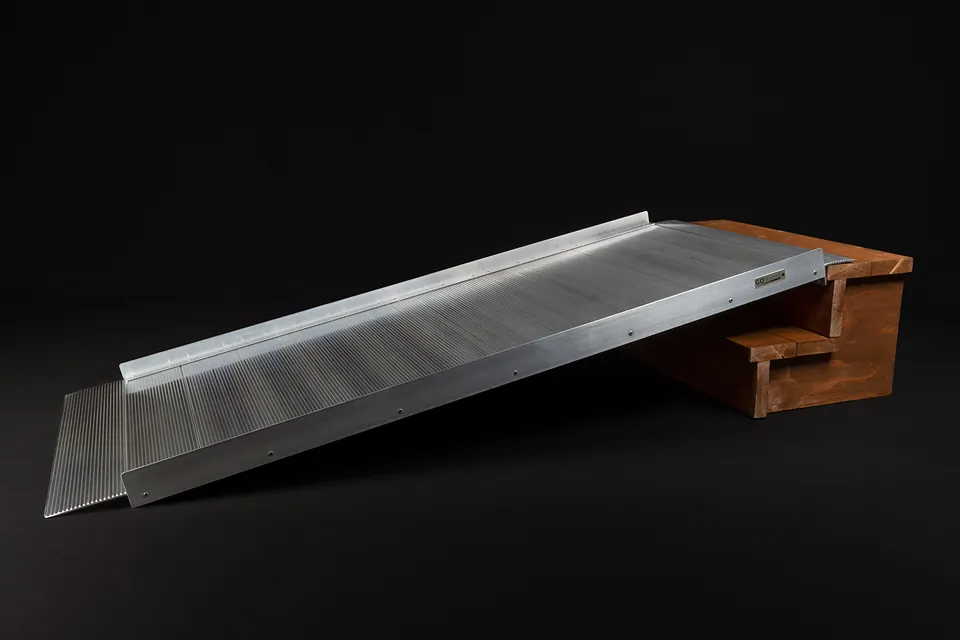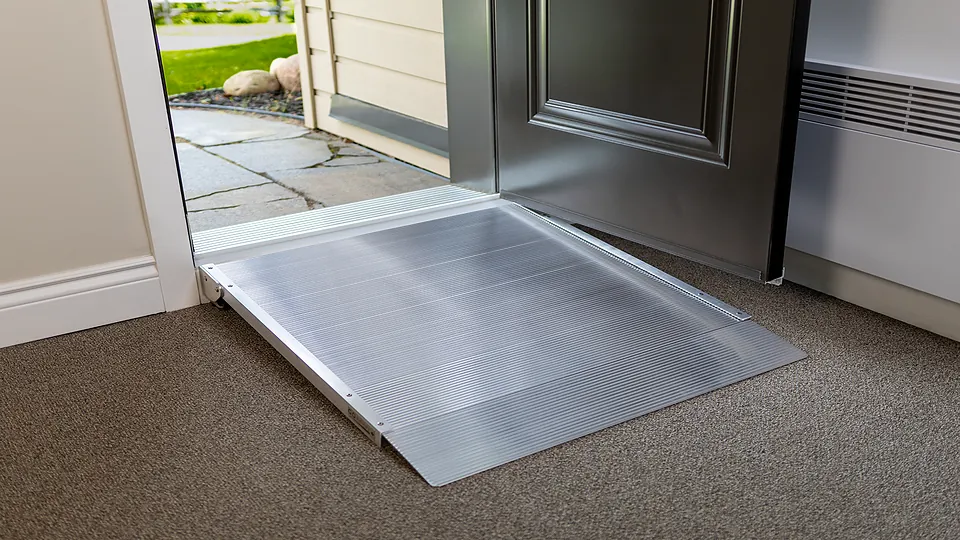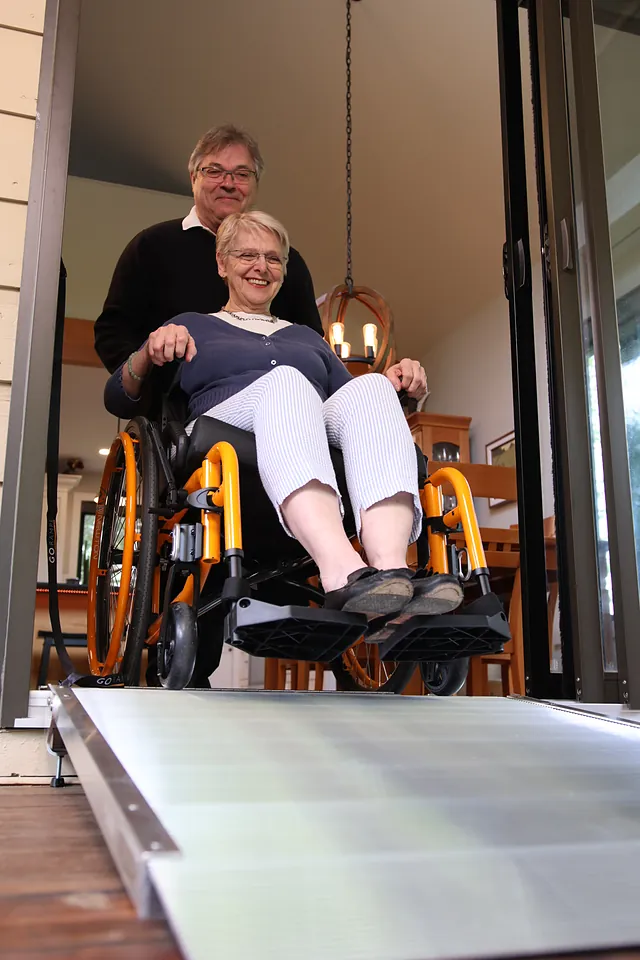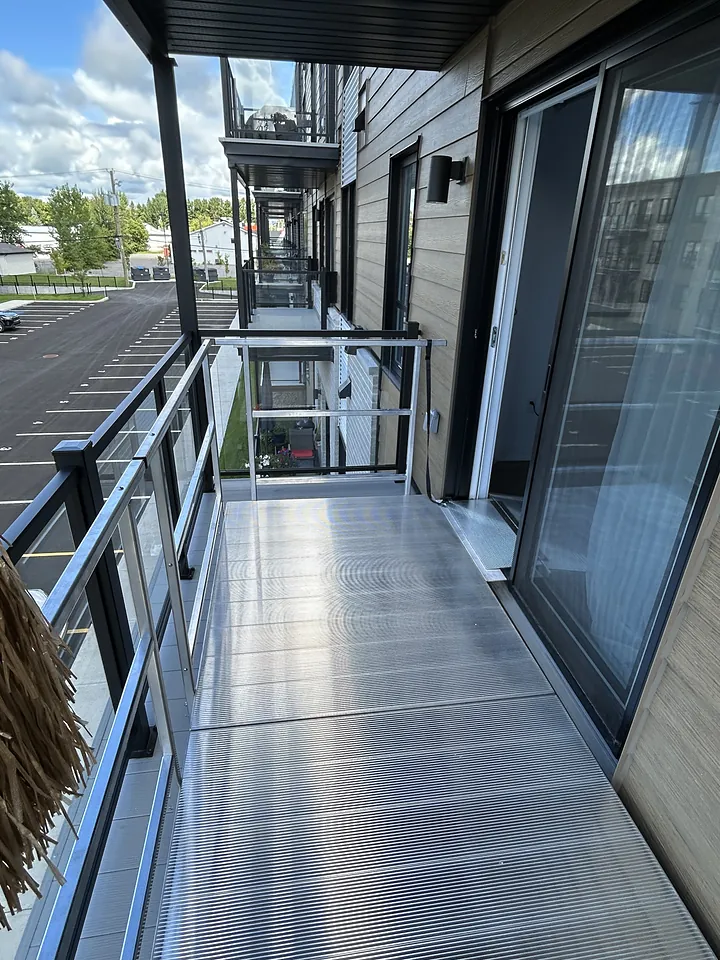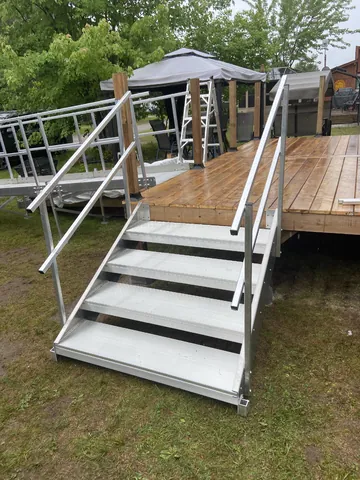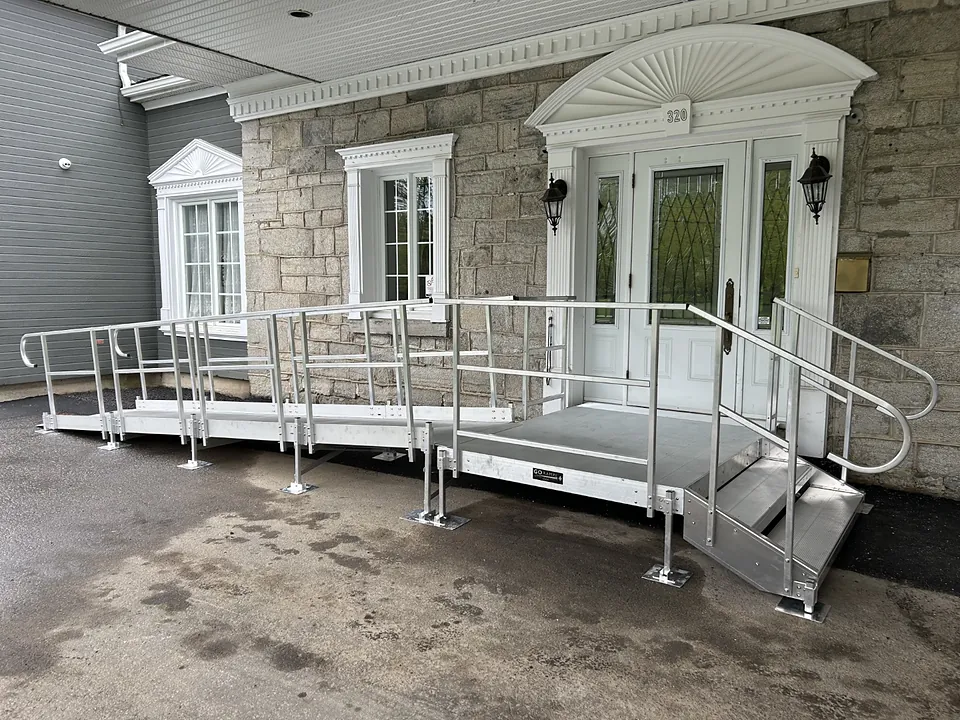
Wood ramp (residential)
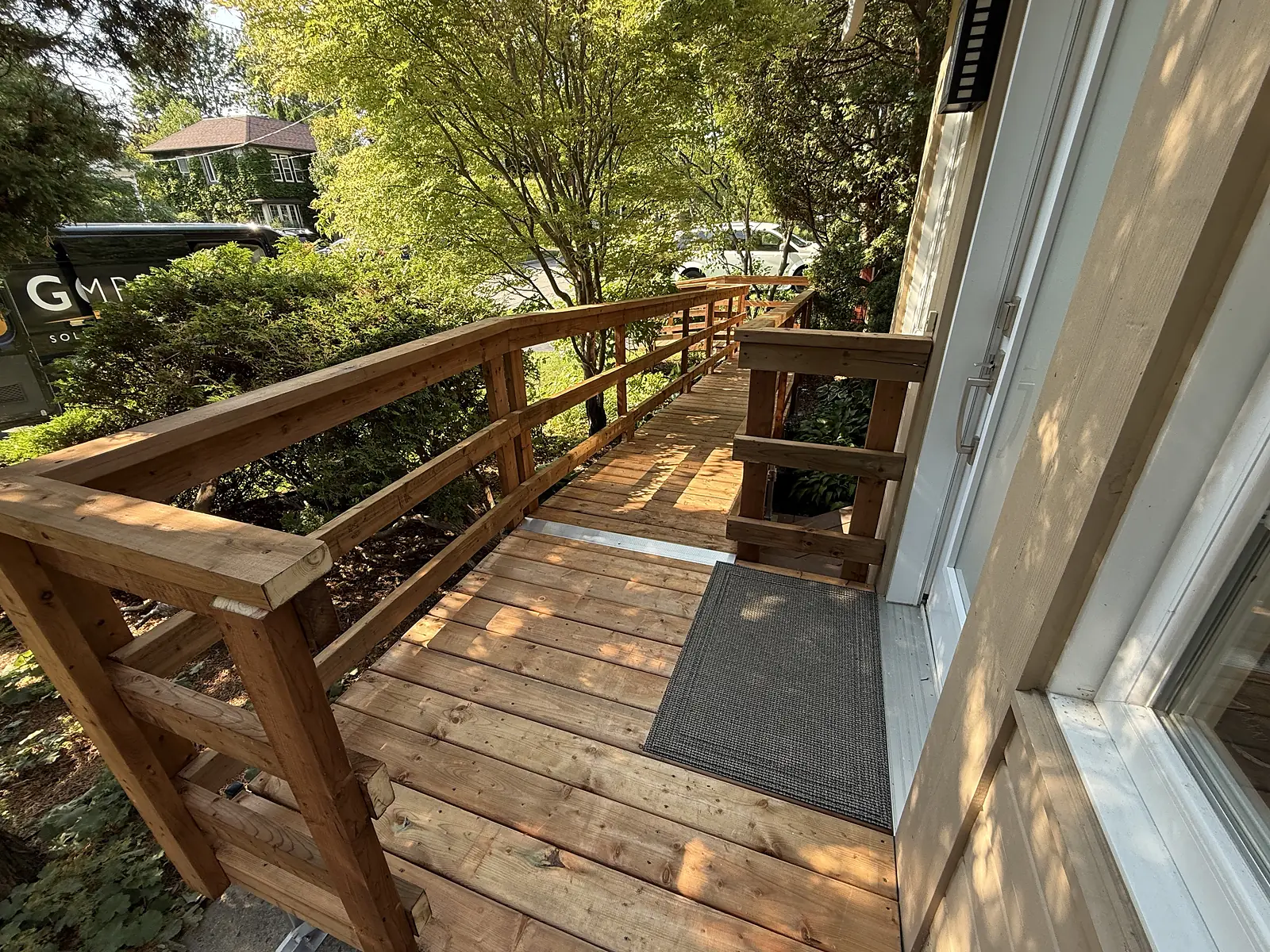 New
The details that matter
- MaterialDurable treated wood
- CostBudget-friendly
- Legsadjustable aluminum
Good to know
What are the advantages of a treated-wood ramp?
The advantages of treated wood are its lower purchase cost compared to aluminum, steel or concrete; its warm, natural finish that blends with the existing surroundings; and the option to be painted or stained to match the home.
What are the disadvantages of a treated-wood ramp?
The main drawbacks are its limited lifespan (10 to 15 years); the fact that it becomes very slippery when wet, icy or snowy; and its zero value at end of life since it is neither reusable nor recyclable, which fills up landfills.
Can different materials be combined (e.g., wood and aluminum)?
Yes, absolutely. We offer solutions combining the warmth and beauty of wood for the floor and guardrails, with our adjustable aluminum leg system to protect the structure from damp ground.
What is the best ramp choice for you?
Treated wood suits tight budgets or temporary needs requiring a warm look. Aluminum remains the best long-term choice: although pricier upfront, it pays for itself in 5 to 7 years (savings on staining, zero maintenance) and offers a safe investment thanks to its high resale value.
Which products are available for rent?
Only 36’’-wide modular aluminum ramps.